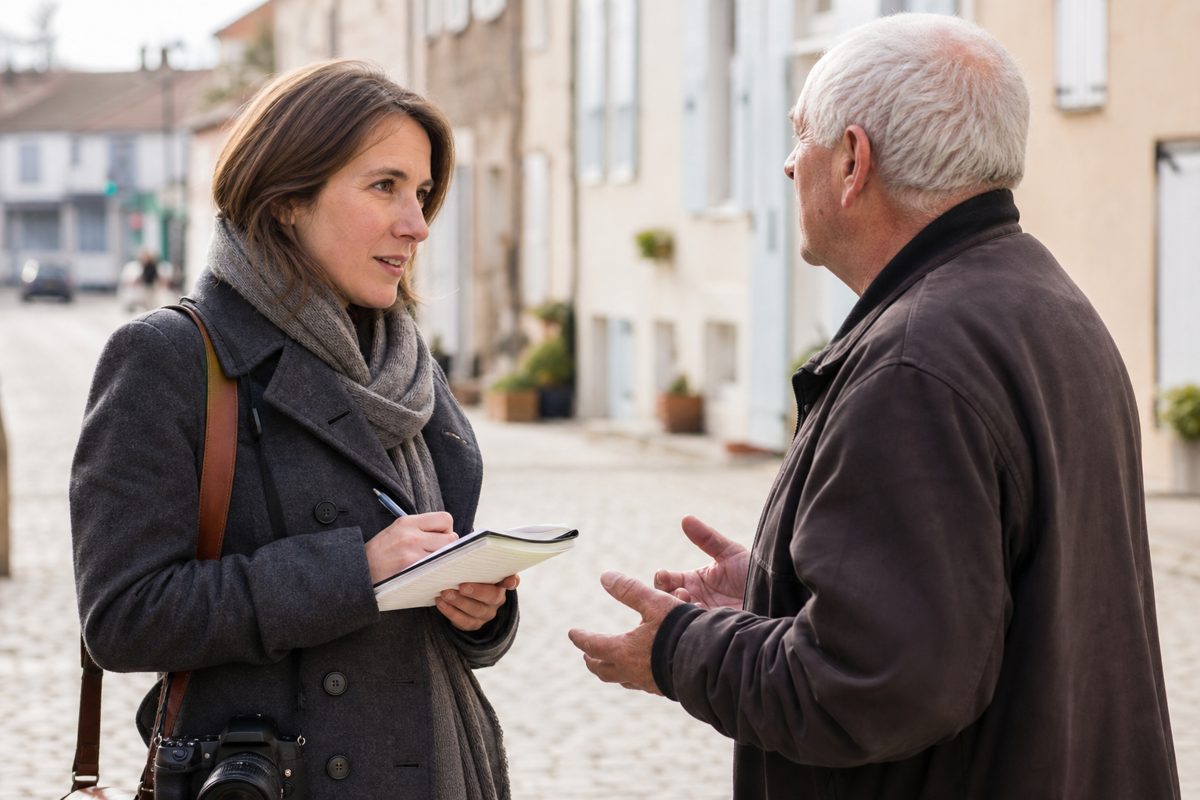
Across Europe, local newspapers and regional broadcasters have been closing or shrinking for two decades. It rarely makes national headlines — which is itself part of the problem. When a town loses its last reporter, there's no longer anyone to report that the town lost its last reporter.
What a "news desert" actually is
Researchers use the term "news desert" to describe a community with little or no dedicated local news coverage. The pattern is now well documented across parts of southern, central and eastern Europe: as advertising revenue moved to global platforms, the business model that funded local reporting collapsed, and newsrooms consolidated into distant regional hubs or vanished altogether.
Why it's not just nostalgia
It would be easy to file this under sentimental attachment to the printed page. The evidence suggests something more concrete. When local coverage disappears, studies have found measurable effects: lower voter turnout in local elections, reduced scrutiny of municipal spending, and in some cases higher local-government borrowing costs, because there is less oversight of how public money is spent.
The accountability gap
National media cannot fill this gap. A reporter in the capital cannot attend a small town's council meeting every week, follow its planning disputes, or notice when a local contract quietly goes to a mayor's cousin. Local accountability requires local presence. Where that presence is gone, decisions that affect people's daily lives happen with no independent witness in the room.
What's working
The picture isn't only bleak. Across Europe, new models are emerging: non-profit local newsrooms funded by readers and foundations, cooperatives owned by their communities, and networks of trained citizen reporters who cover what professional outlets no longer can. None of these is a complete replacement for a well-funded local press — but each keeps at least one witness in the room.
What can be done
Supporting local journalism doesn't require nostalgia for how things were. It requires recognising that local accountability is infrastructure, like roads or courts, and treating its collapse as the public problem it is. That means backing sustainable funding models, protecting the independence of public-interest local media, and — for readers — paying for the local journalism we still have before it, too, becomes a desert.
Sources & further reading
- Reuters Institute for the Study of Journalism, reports on local news sustainability in Europe.
- Academic studies on the civic effects of local newspaper closures (2018–2024).
- European Federation of Journalists, statements on regional media consolidation.